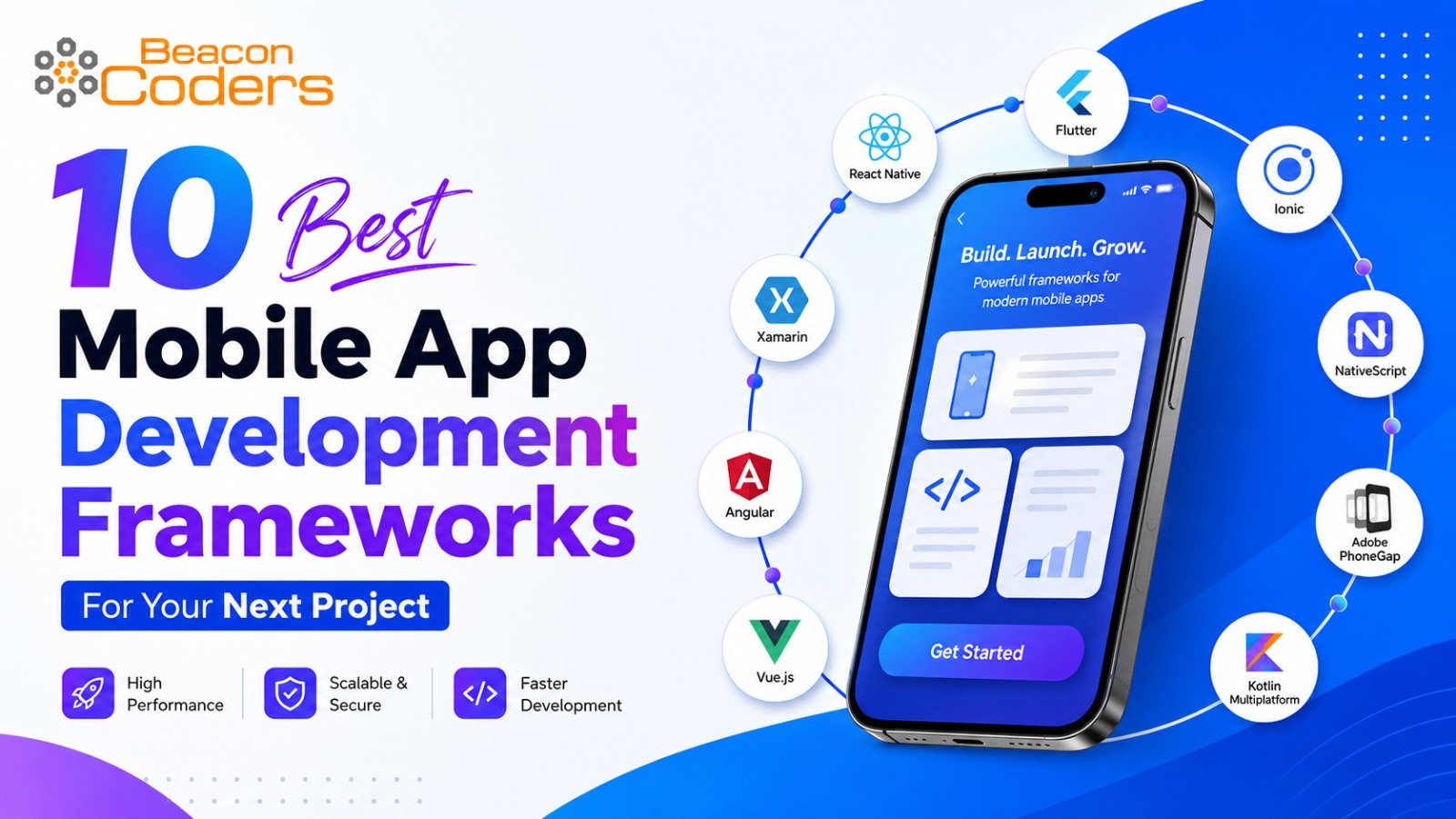
The demand for mobile apps continues to grow in the coming years, supported by businesses looking for new ways to connect with users. This blog examines the top 10 mobile app development frameworks in 2024 and provides specific information about each and every one. By choosing the best mobile app framework that aligns with your business goals, you can deliver great user stories and stay ahead in mobile app development
What Is a Mobile App Development Framework
The mobile app development framework is largely a set of tools and templates that help developers build apps more efficiently. It provides pre-made building blocks like user interface components and navigation systems so builders don't have to start the whole thing from scratch. Furthermore, numerous mobile app frameworks are tailored for specific platforms like iOS and Android. This allows you to write your code quickly and efficiently, enabling seamless compatibility across a variety of devices.
In short, these frameworks simplify the process of mobile app development and empower developers to create creative and useful features without bothering too much about the technical basics.
Top 10 Mobile App Development Frameworks
Creating a mobile app is a task in itself, especially with all these new development frameworks. To make it easier, we've compiled a list of top mobile app development frameworks that can help. Whether you're an experienced developer or a newcomer exploring the app development field, these mobile app frameworks offer excellent choices to streamline and optimize your app deployment process.
Let's explore these 10 top mobile app development frameworks so you can find the right one for your project.
1. React Native
Developed by Facebook, React Native has established itself as one of the top mobile app development frameworks available today. It uses JavaScript and React to provide consistent and local libs on every Android and iOS framework. Developers can use a single code base to write applications for cross-platform.
Key Features:
- Cross-platform development: Build apps for Android and iOS using one shared code base, reducing development time.
- Reusable components: Share common components across multiple projects, increasing efficiency and consistency.
- Third-Party Plugin Support: Integrate external plugins easily to add advanced features.
- Hot Reloading: View real-time updates during development, which speeds up debugging.
Popular Apps: Instagram, Uber Eats, SoundCloud.
Benefits: This mobile app framework enables quicker development cycles and lowers costs due to reusable code. Developers also have access to a large community, ensuring plenty of resources for problem-solving.
2. Flutter
Flutter, created by Google, has gained considerable popularity as a cross-platform user interface toolkit that allows creators to build native applications on mobile, network, and computing systems.
Key Features:
- Unified Codebase: Develop for multiple platforms using a single set of code.
- Customizable widgets: Choose from a large selection of widgets to create unique user interfaces.
- Material and Cupertino designs: Leverage integrated templates that adhere to Material Design guidelines for Android and Cupertino standards for iOS..
- Renderer: Flutter uses Skia, an overall high-performance 2D rendering engine, to provide easy portraits and UI transitions.
Popular Apps: Google Ads, Hamilton, SpaceX Go.
Pros: Flutter presents robust customization alternatives through widgets and simplifies development with a single codebase.
3. Ionic
Ionic is an open-source best app development framework that allows creators to create mobile apps using well-known internet technologies such as HTML, CSS, and JavaScript. Based on AngularJS, Ionic provides a flexible foundation for developing feature-rich applications.
Key Features:
- Built-In UI Components: Access a library of default components like navigation menus, forms, and filters to speed up development.
- AngularJS-Based: Utilize the robust AngularJS framework for efficient development and maintainability.
- Cordova Plugins: Add extra features through third-party plugins that integrate easily with the framework.
- Platform Independence: Create cross-platform mobile apps that work seamlessly on Android, iOS, and Windows.
Popular Apps: MarketWatch, Amtrak.
Benefits: Ionic enables quick development and provides flexibility for creating both native-like and web-based applications.
4. Xamarin
Xamarin, owned by Microsoft, uses the .NET platform to help developers build native programs on Android, iOS, and Windows devices. This best mobile app framework for cellular applications simplifies the implementation of high-performance programs.
Key Features:
- Native API Access: Directly access APIs available to native applications for seamless integration.
- Shared Codebase: Share business logic and code across multiple platforms for efficient development.
- UI Customization: Design unique user experiences using native UI components tailored to each platform.
- Microsoft Integration: Integrate apps with Azure and other Microsoft services for enhanced cloud capabilities.
Popular Apps: OLO, Alaska Airlines.
Benefits: Xamarin offers a robust development environment with an extensive set of tools for creating high-quality, native-like apps.
5. Mobile Angular UI
Mobile Angular UI brings together Angular and Bootstrap to create the best app development framework specifically aimed at delivering responsive mobile app interfaces.
Key Features:
- Interactive Components: Access overlays, sidebars, scrollable areas, and other UI elements for a rich user experience.
- Cross-Browser Compatibility: Automatically adapt JavaScript code for different browsers, providing a consistent experience.
- No jQuery Dependency: Leverage the framework's native JavaScript capabilities without requiring jQuery.
Popular Apps: Hotelier News, iKeyBox.
Pros: The responsive layout of this framework guarantees that your app will perform well within gadgets and frameworks and provide a seamless experience to users.
6. Adobe PhoneGap
Acquired by Adobe Systems, PhoneGap is an open-source best mobile app framework that allows developers to build mobile apps on a platform that uses Internet technologies like HTML5, CSS3, and JavaScript.
Key Features:
- Code Reusability: Develop an app once and deploy it across multiple platforms.
- No Hardware Limitations: Avoid hardware configuration issues while developing applications.
- Plugin Library: Access a vast library of plugins to extend the app's functionality.
- Adobe Integration: Integrate with Adobe Creative Cloud for a seamless design-to-development workflow.
Popular Apps: Wikipedia, TripCase.
Benefits: PhoneGap simplifies the process of creating custom application development projects, especially for developers with a strong web development background.
7. Appcelerator Titanium
Developed by Appcelerator Inc., Titanium is a primarily JavaScript-based SDK that offers more than 5,000 APIs to streamline cross-platform mobile app adoption.
Key Features:
- Cross-platform compatibility: Build apps for Android, iOS, Windows, and HTML5 using a shared code base.
- Reusable code: Reuse up to 90% of your code for cross-platform projects.
- API Management Tools: Efficiently manage APIs and their integration during development.
- Built-In UI Components: Use common UI elements like navigation panels, side menus, and list views for faster development.
Popular Apps: Avis, Comerica.
Benefits: The Titanium SDK allows developers to build custom apps while maximizing code reuse and improving performance.
8. Framework7
Framework7 is the best app development framework for developers who want to create mobile, desktop, and web applications that offer native fun using HTML, CSS, and JavaScript.
Key Features:
- Rich UI Elements: Choose from action sheets, panels, list views, and other components for intuitive user interfaces.
- Seamless Integration: Integrate with popular tools like Electron and NW.js for added functionality.
- Customizable Widgets: Customize UI components to match your application's theme and style.
- Support for Vue.js and React: Utilize these popular frameworks alongside Framework7 for more flexibility.
Popular Apps: Blokt, Wappler.
Benefits: Framework7 gives developers flexibility and control over the final look and feel of their apps while maintaining cross-platform compatibility.
9. jQuery Mobile
This HTML5-based, entirely mobile app development framework simplifies the development of cross-platform applications that provide a consistent user experience across various devices.
Key Features:
- Lightweight Size: Its minimal footprint leads to faster loading times and reduced resource consumption.
- Powerful Theming Framework: Customize the app's look with a range of theming options.
- Add-On Plugins: Extend the app's capabilities with sliders, pop-ups, and other plugins.
- Multi-Platform Support: Run a single code version across multiple devices.
Popular Apps: Untappd, Veev.
Benefits: Due to its lightweight nature, jQuery Mobile is ideal for simple yet highly functional mobile applications with a simple user interface.
10. NativeScript
NativeScript is one of the open mobile app development frameworks that allows you to build native mobile apps using Angular, Vue.Js, TypeScript or JavaScript.
Key Features:
- Direct API Access: Access native APIs directly, similar to how native apps do.
- Near-Native Performance: Achieve high performance due to direct access to native components.
- Cross-Platform Codebase: Share a unified codebase across Android and iOS.
- Backend Support: Integrate with powerful back-end services to ensure secure data management.
- Continuously test and optimize: Regularly test with specific design factors and uncover overall performance to discover the most effective website landing page design.
Popular Apps: Smart Evaluation, MayMyPhotos.
Benefits: NativeScript is an excellent choice for developers seeking native-like performance while simplifying development with cross-platform code sharing.
Conclusion
In today's competitive landscape, choosing the best mobile app development frameworks in 2024 is vital to creating immersive and effective mobile apps. Now, you must get a fair idea about the key features and benefits these above-discussed mobile app development frameworks offer.
By choosing the right framework that matches your goals, you can tap into mobile app frameworks' potential to create custom apps that truly connect with your audience. You should also consider partnering with a reliable mobile app development company in India to fulfill your project needs and utilize their team's expertise to find the best app development framework. With the right framework, your app will not only keep up with mobile app development trends but also set new standards for functionality and user engagement.